30 September 2026
How Physiotherapy Helps with Parkinson's Disease
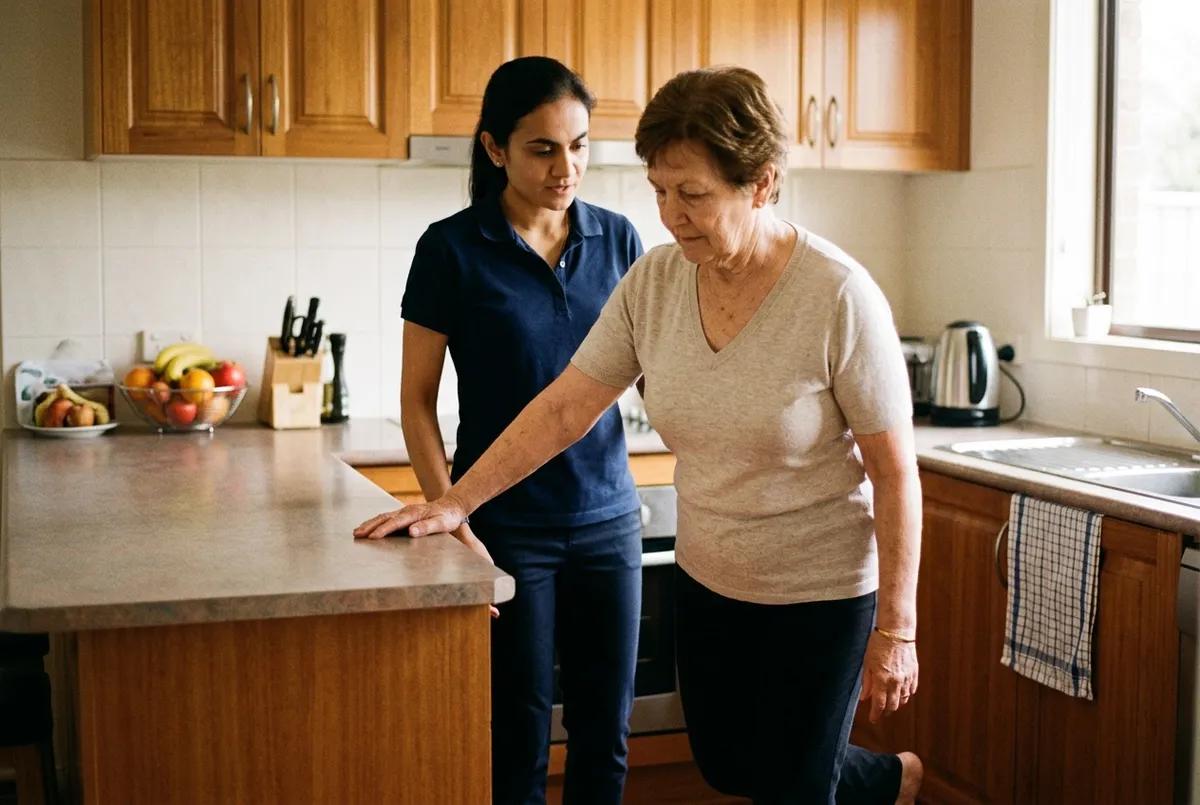
For a long time, physiotherapy for Parkinson’s disease was thought of as symptom management, helping someone move a bit easier, stay a bit steadier, nothing more. That picture has shifted. Some of the more recent research suggests exercise might actually influence the course of the disease itself, not just how someone copes with it day to day.
Exercise and the course of the disease
A US trial called SPARX found that people in the early stages of Parkinson’s who did high intensity treadmill exercise had more stable motor symptoms over time, while a comparison group without that exercise saw their symptoms decline. A separate trial in the Netherlands, Park-in-Shape, found something similar with a six month home based aerobic exercise program, smaller declines in motor function compared to those who weren’t doing structured aerobic exercise.
It’s worth being careful here. This evidence is promising, not settled, and a larger trial (SPARX3) is still working through whether intensity makes the difference. But it’s a genuinely different way of thinking about physiotherapy for Parkinson’s, less “this will help you cope” and more “this may be part of the treatment itself.”
Why movements shrink, and how retraining helps
One of the lesser known features of Parkinson’s is that movements gradually shrink without the person really noticing. Steps get smaller, handwriting gets smaller, voices get quieter, and the person often feels like they’re moving normally the whole time. This happens because the brain’s internal sense of how big a movement is becomes miscalibrated.
A specific approach called LSVT BIG works directly on this. It trains big, exaggerated movements repeatedly until they start to feel normal again, essentially recalibrating that internal sense of scale. Research has found measurable improvement in this proprioceptive recalibration after a few weeks of the program, and it’s recommended in the European Physiotherapy Parkinson’s guidelines for improving walking, balance and transfers.
Freezing of gait, and the strange tricks that work
Freezing of gait is one of the more distressing symptoms of Parkinson’s, the feet suddenly feel stuck to the floor, often in a doorway, during a turn, or when approaching a chair. It’s not weakness. It’s a breakdown in the automatic signals that normally tell the legs to keep moving.
What’s genuinely interesting is how well external cues can interrupt this. A rhythmic sound, a metronome, counting out loud, even a favourite song, can reduce the number of freezing episodes and improve step length. Lines on the floor or a laser pointer can do something similar visually, giving the brain something concrete to step toward when its own internal cues aren’t getting through. These aren’t tricks people stumble onto by accident, they come from a real, and fairly consistent, body of research.
Falls prevention, honestly
It would be easy to say physiotherapy simply prevents falls in Parkinson’s. The evidence is more honest than that. A large trial called PDSAFE, which delivered tailored, home based physiotherapy to people with Parkinson’s, didn’t reduce repeat falls across the whole group it studied. But it did show benefit in people with milder Parkinson’s, just not in those with more advanced disease.
The real takeaway isn’t that falls prevention work doesn’t matter, it’s that timing matters. Starting balance and strength work earlier, rather than waiting until falls become frequent, appears to give it a genuinely better chance of making a difference.
Why home based physiotherapy fits Parkinson’s so well
Freezing tends to happen in very specific, very ordinary places, a doorway, a tight turn into the kitchen, the transition from carpet to tile. A clinic simply can’t recreate someone’s actual hallway, their actual front step, their actual chair. The PDSAFE program mentioned above was itself delivered in people’s homes, tailored to each person’s own pattern of falls, because that’s where the real problem actually shows up.
Parkinson’s physiotherapy is available through both the NDIS and Support at Home, depending on age and circumstances, and either way, working in the home environment tends to make the practice more relevant and the results more likely to carry over into daily life.
The wider picture
Beyond movement itself, exercise has also been linked to better sleep quality and general quality of life in people with Parkinson’s, based on a review pooling data from over three thousand participants across many separate studies. None of this replaces medical treatment, but it does suggest physiotherapy has a more central role in managing Parkinson’s than it’s often given credit for.
If you or someone you care for is living with Parkinson’s and you’d like to talk about what physiotherapy at home could look like, get in touch.