7 August 2026
What Physiotherapy Looks Like Under Support at Home

Support at Home is the government program that replaced Home Care Packages from November 2025, and one of the more useful things it funds is physiotherapy, delivered not in a clinic, but at home. For a lot of older adults, that difference matters more than it sounds.
What “Mobile Physio” Actually Means
Mobile physiotherapy is exactly what it sounds like. The physiotherapist comes to you, rather than the other way around. There’s no transport to arrange, no waiting room, no getting dressed up for an appointment, and no exhausting trip that eats up the rest of the day.
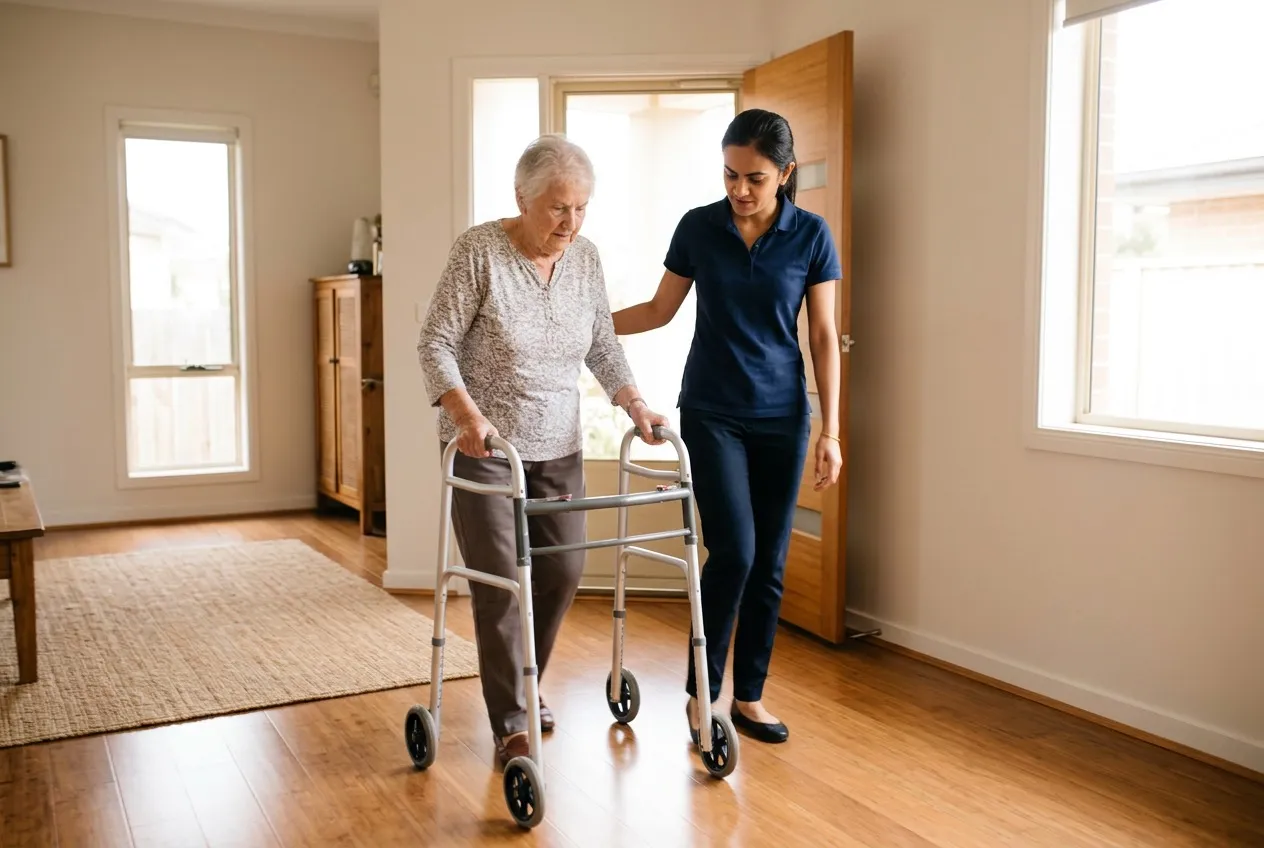
Sessions happen in the lounge room, the hallway, the bathroom, the garden, wherever the movement actually needs to happen. For someone managing mobility issues, fatigue, or simply the effort involved in leaving the house, that alone can be the difference between getting support regularly and quietly putting it off week after week.
It also tends to suit people who feel more comfortable and more themselves at home. A clinic setting can feel clinical in the least helpful sense, a bit formal, a bit rushed. Home visits usually feel more relaxed, which often means people engage with their exercises more honestly and ask more questions.
Why It’s So Closely Linked to Older Adults
A lot of what changes with age isn’t dramatic. It’s small. A bit less steady on the stairs. A bit more hesitant getting out of a low chair. A longer recovery after a minor illness or a short hospital stay. None of that necessarily needs a clinic appointment. It needs consistent, practical support in the place where those changes actually show up.
Home visit physiotherapy works well here because it can address the real environment directly, the actual step into the shower, the actual distance to the letterbox, the actual chair someone struggles to get up from. A clinic gym mat, however well equipped, can’t fully replicate that. Practising a movement in the exact spot it needs to happen tends to build confidence faster than practising something similar somewhere else.
What a Session Might Involve
Every plan looks different depending on the person, but common areas of focus include:
- Strength and balance work to support everyday movement
- Reducing fall risk and building confidence moving around the home (if falls are a worry, my post on balance habits that help prevent falls has simple tips you can start today)
- Recovery support after a fall, illness or hospital stay
- General mobility maintenance to help someone stay independent for longer
- Simple, realistic home exercises that fit into an ordinary day, not a gym routine
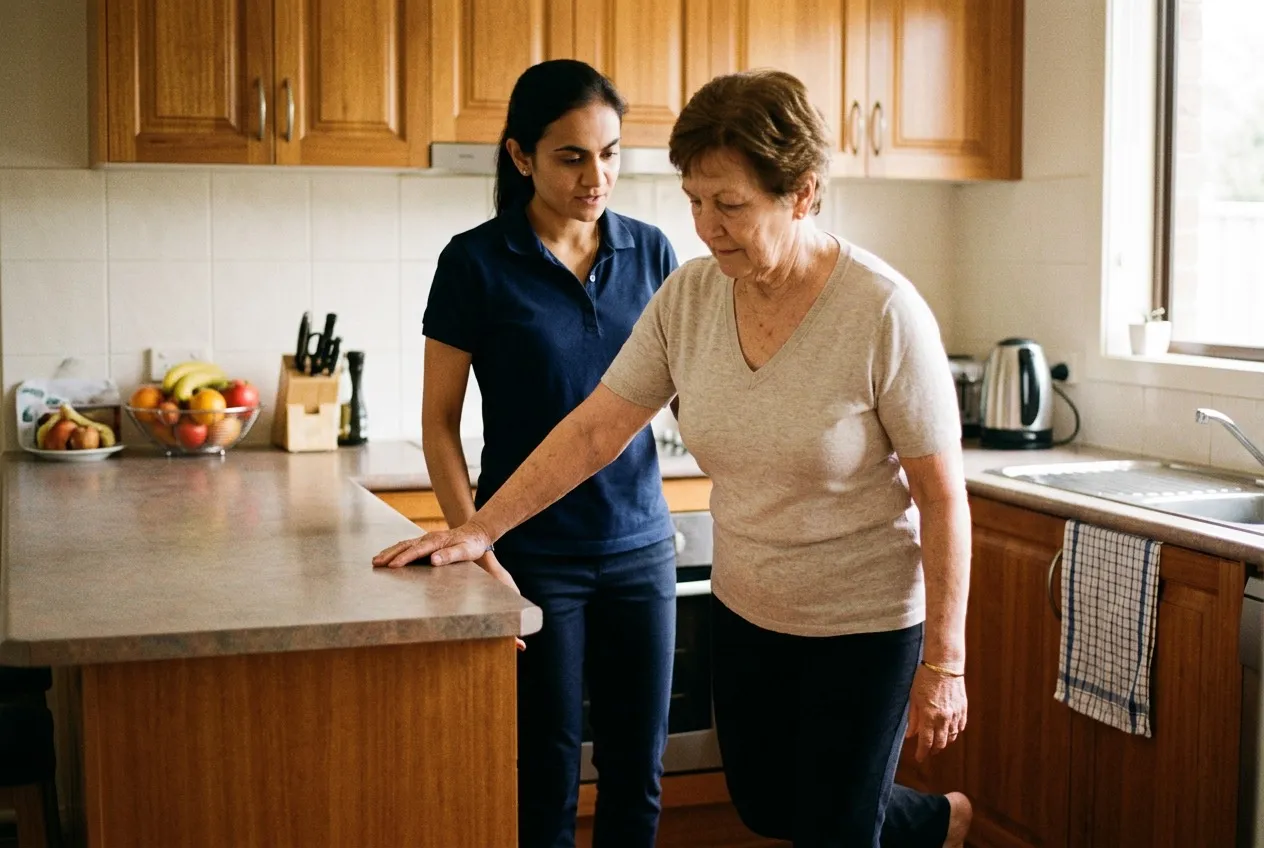
Sessions usually start with a proper initial assessment, current strength, balance, walking pattern and personal goals, before building a plan around what actually matters to that person. From there, progress is reviewed regularly and the plan adjusts as things change, because needs right now rarely look the same twelve months later.
Working Alongside Family and Care Teams
Support at Home often involves more than just the person receiving care. Family members, care coordinators and plan managers are frequently part of the picture too, and home visits make it easier for everyone to stay on the same page. A family member can sit in on a session, ask questions, or simply see for themselves what progress looks like, something that’s much harder to arrange around a clinic appointment.
Why the Model Works
Physiotherapy under Support at Home isn’t about a single fix. It’s ongoing, practical support that adjusts as needs change over time. Because it’s delivered at home and fits naturally into daily life, it tends to actually happen consistently, rather than becoming the appointment that keeps getting postponed until it’s forgotten altogether. And consistency, more than any single session, is usually what makes the real difference to staying steady, capable and independent at home.
Have a question about whether physiotherapy fits into a Support at Home plan? I visit clients across Canberra and the surrounding region, and I’m happy to help figure that out, feel free to reach out.